Mako Idemitsu. A body of work that had caught my attention as I watched images of Japanese families on CRT screens at museums overseas. Looking at the works again in Japan, I came to understand the essence of what this artist wanted to express.
Mako Idemitsu. She is a Japanese female artist. She is known mainly for her video works, which she created from the 1970s through the 1980s. She is not an artist that everyone knows. I did not know her either. Among Japanese artists, she is different from artists such as Yayoi Kusama, Yoshitomo Nara, and Takashi Murakami, who often appear in the media.
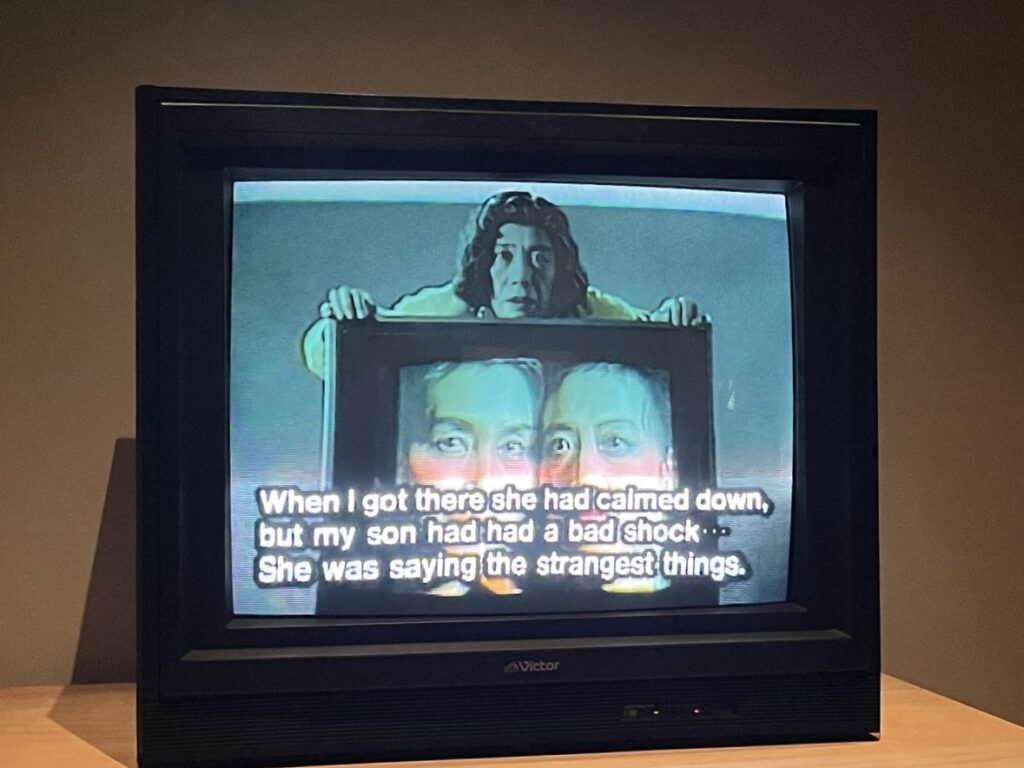
I first saw this artist’s work at a museum overseas. If I remember correctly, it was at the New National Gallery in Munich, Germany. Her work was playing on a CRT television. It showed a Japanese mother and her child. I watched it for a while, but I found it somewhat comical and did not watch the whole thing.
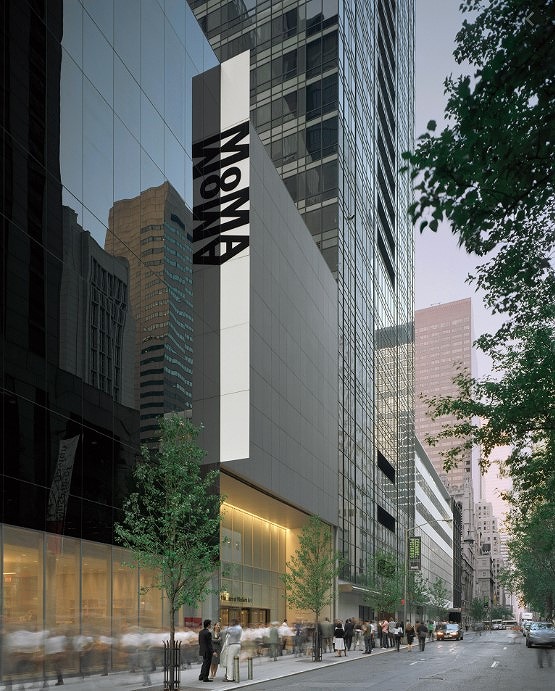
After that, I saw her videos depicting Japanese people from the past once or twice at museums overseas. Then, in 2026, I found her work on display at the Museum of Modern Art (MoMA) in New York. This time, I stood in front of the CRT television and watched it for about ten minutes. Something about it caught my attention. The work was “Hideo, It’s Me, Mama,” which I will introduce later.
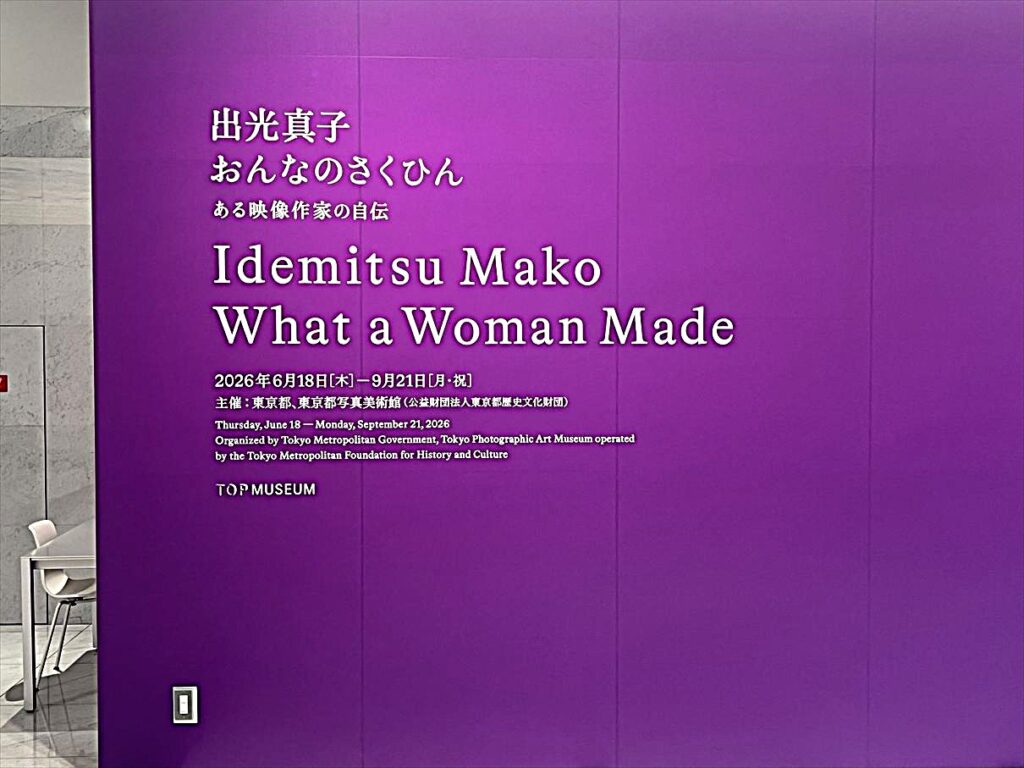
Then, in July 2026, I visited the Tokyo Photographic Art Museum to see her exhibition, “Mako Idemitsu: What a Woman Made (Autobiography of a Video Artist)”. As I viewed the series of works on display, I came to understand what this artist wanted to express through her work. I also understood why her works had caught my attention when I had seen them only in fragments before.
Her works show the lives of ordinary Japanese families during the period of rapid economic growth. Her subjects include male dominance, the patriarchal family system, and concern about what others think. She made her main works from the 1970s through the 1980s, and I found that her works had much in common with the social issues I felt at the time, as well as with my own family and the families around me. This made me feel a connection with her work.
I think the following were values that people naturally accepted in ordinary Japanese society during the period of rapid economic growth.
・It was considered normal for both men and women to get married.
・It was considered normal for a married couple to have two children.
・It was considered normal for women to stop working and become housewives after getting married.
・It was not seen as socially acceptable for women to remain unmarried and continue working.
・Women were expected to take care of the home and support their husbands so that their work would not be affected.
・A woman’s role was to raise children and give up what she wanted to do herself.
I would like to introduce the following three works as examples that express these values. I remember seeing these three works displayed at exhibitions other than the exhibition at the Tokyo Photographic Art Museum. The descriptions below are from a pamphlet for an exhibition held in 2026.
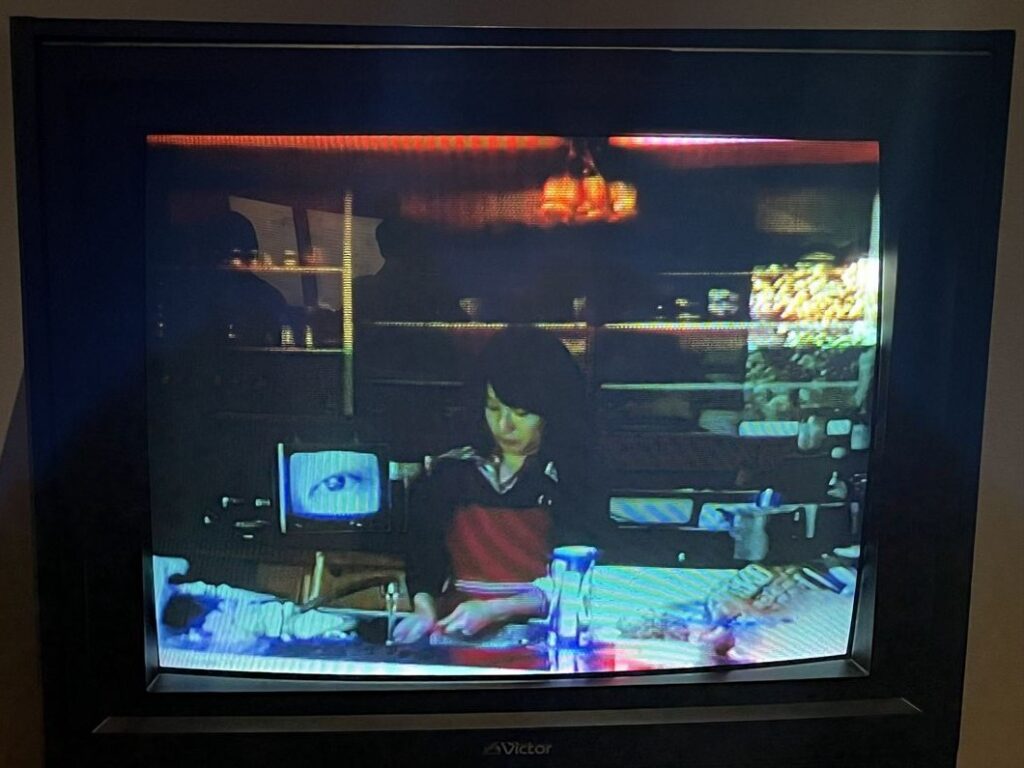
Another Day of a Housewife
1977, Single-channel video, color, sound
(Japanese lyrics), 9 min. 50 sec.
This work features Idemitsu herself. It captures the repetitive daily life of a housewife in long takes. In this work, Idemitsu’s own eyes, filmed using a close-up lens, are projected large on the video monitor as they constantly watch and follow the housewife before the camera. The work depicts how the socially constructed position of the housewife is not only formed by the gaze of the world around her; it is also internalized by her own inner gaze.
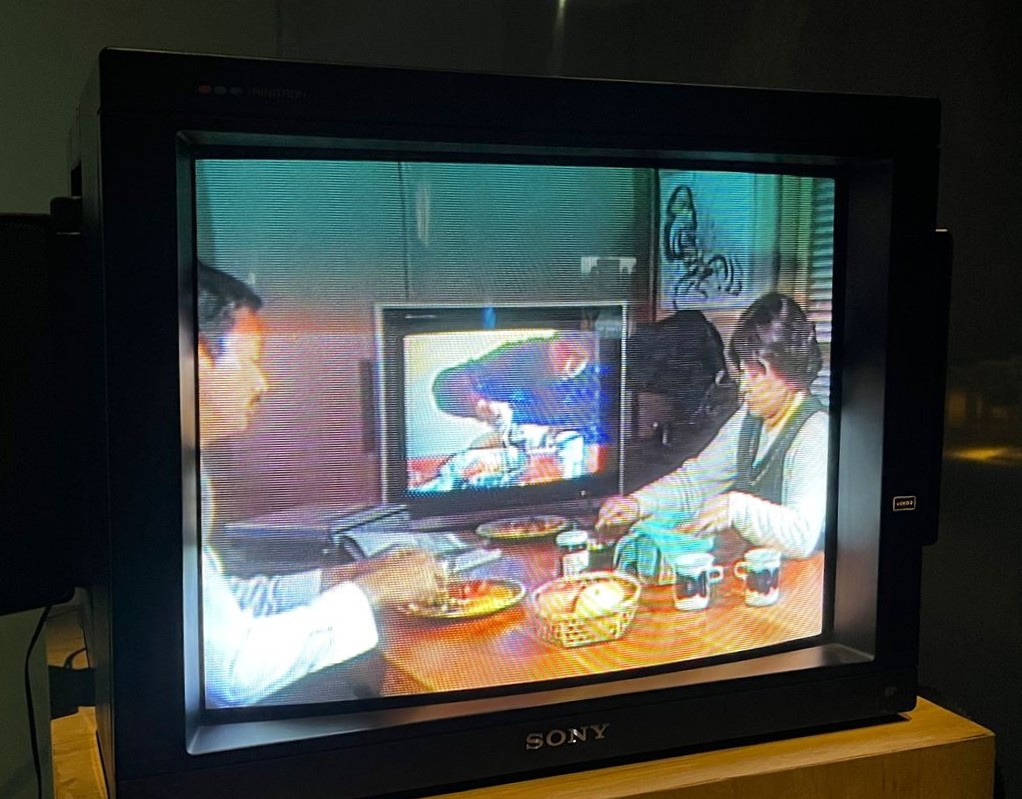
Hideo, It’s Me, Mama
1983, Single-channel video, color, dialogue in Japanese with English subtitles, 27 min.
Camera: Michael Goldberg Technical Support: Japan Electronics College
This work depicts the actions of a mother displaying an abnormal obsession with her son, who has left home to start a job. In the early 1980s, the new home video format VHS went on sale and began to penetrate households. Seeking to fill her son’s absence, the mother repeatedly plays VHS tapes of him on the monitor in the living room, and prepares meals for the son in that footage. Drawing from her experience raising her children in America, Idemitsu questions the relationship dynamics in Japan where mothers themselves hinder the independence of their children.
Kiyoko’s Situation
1989, Single-channel video, color, dialogue in Japanese with English subtitles, 24 min. 20 sec.
Camera: Michael Goldberg 16mm Camera: Mikoshiha Shigeru, Nomoto Yasuo
A woman who aspires to be a painter marries under pressure from her parents. Overwhelmed by housework and childcare, however, her desire to continue painting meets with puzzlement from those around her. The film depicts the process of a woman being pushed to the brink. Unable to suppress her desire for self-expression, and with her path to becoming an artist blocked, her anguish culminates in heart-wrenching cries. This work was conceived not only from Idemitsu’s own experiences, but also by referencing the relationship between sculptor and poet Takamura Kotaro and Takamura Chieko. It is also dedicated to her eldest sister, who aspired to be a painter in Paris but died suddenly after much suffering.
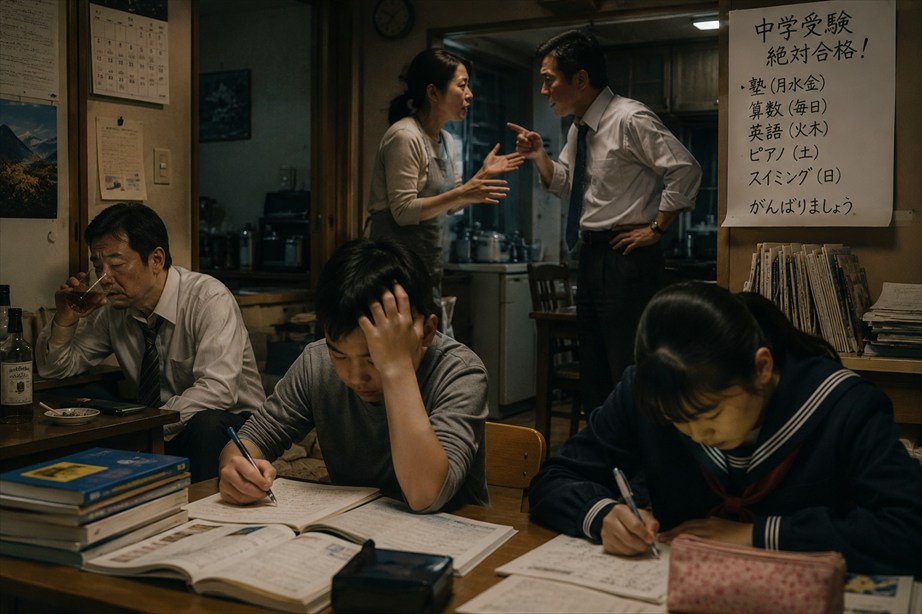
It may be very stereotypical, but when I think of an ordinary Japanese family during the period of rapid economic growth, I imagine something like the following.
The family consists of a father, a mother, and two children. They live in a house along a private railway line in the suburbs of Tokyo. The father is a salaried employee at an ordinary company. His working hours are from 9 a.m. to 5 p.m., but he works overtime every day. His overtime is not just one or two hours. It is common for him to work until around 9 or 10 p.m. Sometimes, he does not finish work until after midnight. Because of this, he comes home late at night. The children are already asleep, so he cannot communicate with them on weekdays. There are also no mobile phones or smartphones, so the family has no regular way to communicate with each other. The whole family can be together on Saturday or Sunday, but the children may be away at cram school or other lessons. The father may also be away playing golf with clients. Or, because he is exhausted from work during the week, he may spend Saturday and Sunday sleeping at home.
Parents encourage their children to go to good schools for their future and tell them to study. The children are busy with their studies, and they also need to take part in activities after school. They have little time or room in their daily lives. Meanwhile, the lack of communication within the family causes the father and mother to become distant, and the children begin to question their busy lives. The family gradually stops functioning well. Some fathers become dependent on alcohol, women, or gambling. Some mothers, unable to do what they want to do themselves, begin to place their hopes on their children and become overprotective or overly focused on their children’s education.
In fact, Mako Idemitsu was the daughter of the founder of Idemitsu Kosan, a major Japanese company, and her family background also had a major influence on her work. One of the works displayed in the exhibition was “Scenes of My Father.” It included a description of her father as “a person who seemed to wear an attitude of male dominance like clothing.” In other words, what Mako Idemitsu depicted was probably not simply “women’s issues,” but the image of the family that postwar Japan itself had created.
Mako Idemitsu was born in 1940. The Pacific War, which was fought against the United States, began in 1941 and ended in 1945. She therefore experienced the war, postwar Japan, and the period of rapid economic growth.
I think these values remained in Japanese society because, as the country became stable after the war and moved toward a period of rapid economic growth, values that had continued from before the war still remained strong. Personally, I think this kind of attitude was still very much present when I was a child and a student.
Now, 80 years have passed since the end of the war. The values I described above are not as strong as they once were, but I feel that the idea of “what others think” still remains in Japan. There may be debate over which is better or worse, but at least I think it is true that people now have more choices in how they live their lives.
At the 2026 exhibition at the Tokyo Photographic Art Museum, I felt that there were many young women among the visitors. Mako Idemitsu has an English page on Wikipedia, but she did not have a Japanese page at the time I wrote this article. I found this surprising. Perhaps she is better known overseas than in Japan.
I think she is an artist whose work is very useful for understanding Japanese society. If you find her video works at a museum, I hope you will stop and take some time to watch them. You may feel something.
★ If you have a chance to visit the exhibition at the Tokyo Photographic Art Museum, I strongly recommend going.
Basic Informaiton
■ Name : Tokyo Photographic Art Museum / Mako Idemitsu: What a Woman Made (Autobiography of a Video Artist)
■ Address : 1-13-3 Mita, Meguro-ku, Tokyo, inside Yebisu Garden Place
■ Homepage : https://topmuseum.jp/exhibition/5417/?lang=en
■ Others : The exhibition is on view until September 21, 2026.